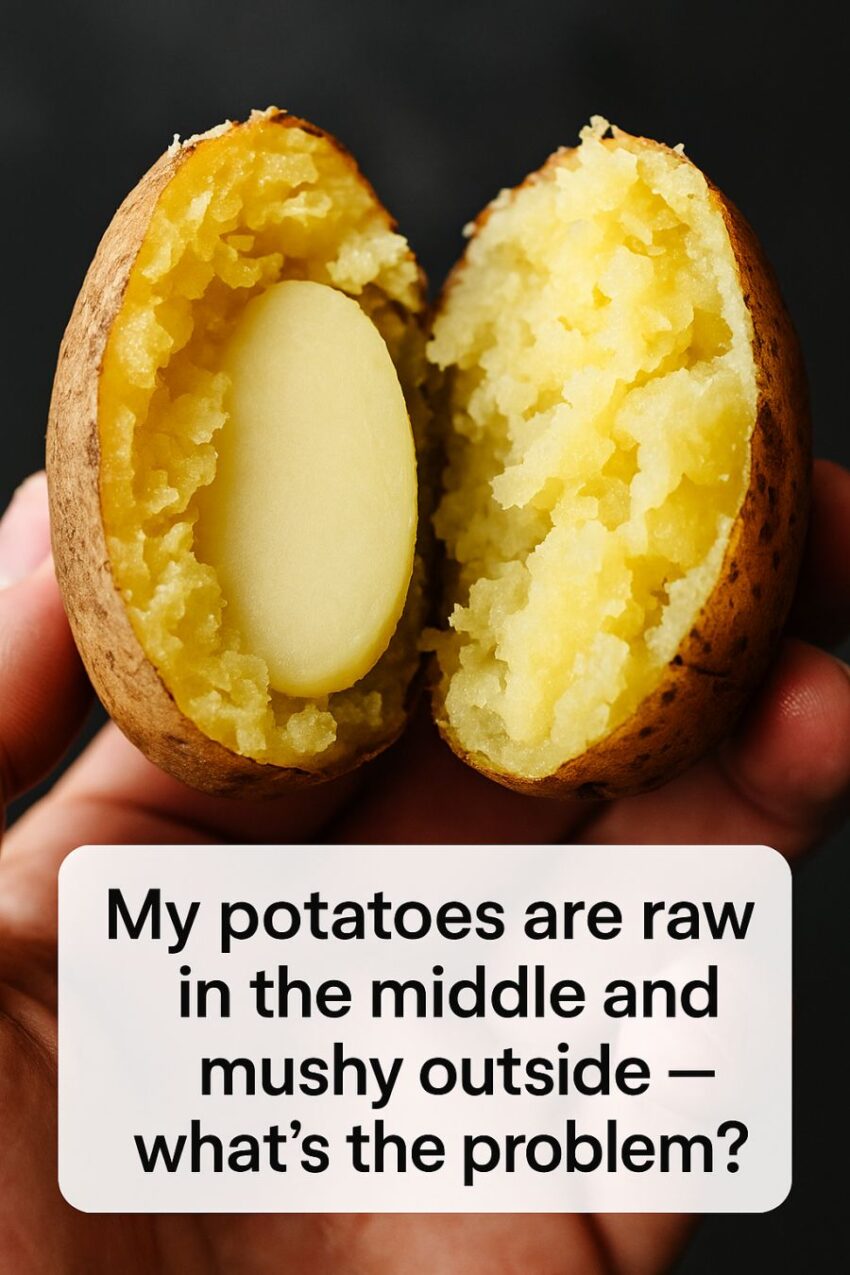
Potatoes are a staple in many kitchens around the world, beloved for their versatility and comforting qualities. However, anyone who has attempted to cook them knows that achieving the perfect texture can sometimes be a challenge. Nothing is more frustrating than biting into a potato dish only to discover that while the outside is soft and mushy, the inside remains stubbornly raw.
Understanding why this happens and how to prevent it requires a deeper dive into the cooking process and the characteristics of different potato varieties. In this article, we’ll explore common reasons behind this culinary conundrum and provide practical solutions to help you achieve perfectly cooked potatoes every time.
1. Why Potatoes Go Mushy Outside but Stay Raw Inside
When potatoes become mushy on the outside but remain raw on the inside, it often indicates an imbalance in cooking time and temperature. High temperatures can cause the exterior to cook much faster than the interior. Potatoes are dense and contain a lot of starch, which takes time to cook through. If the heat is too intense, the outside cooks rapidly, breaking down into a mushy texture, while the heat hasn’t penetrated enough to cook the inside.
Another factor is the moisture content in the potatoes. As potatoes cook, the water in them turns to steam, which helps cook the potatoes from the inside out. However, if the heat is too high, the water can evaporate from the exterior too quickly, leading to a mushy outside and an undercooked center.
2. Inconsistent Cutting Size: The Silent Saboteur
One of the most overlooked reasons for unevenly cooked potatoes is inconsistent cutting size. When potatoes are cut into uneven pieces, smaller pieces cook faster than larger ones. This means that by the time the larger pieces are cooked through, the smaller ones have already overcooked and turned mushy.
To ensure even cooking, try to cut your potatoes into uniform pieces. For example, if you’re making mashed potatoes, aim for 1-inch cubes. This ensures that each piece cooks at the same rate, resulting in a consistent texture throughout.
3. Choosing the Wrong Potato Variety for the Job
Not all potatoes are created equal. Different types of potatoes have varying levels of starch content, which affects their behavior during cooking. High-starch potatoes like Russets are great for baking and frying as they become fluffy inside but can also fall apart easily if overcooked. Waxy potatoes, like Red Bliss or Yukon Gold, hold their shape better and are ideal for boiling or in salads.
Using the wrong type of potato for your dish can lead to undesirable textures. If you’re experiencing undercooked centers, consider switching to a potato variety better suited for your cooking method.
4. Starting in Boiling Water Instead of Cold
Starting your potatoes in boiling water might seem like a time-saver, but it can actually cause uneven cooking. When potatoes are added directly to boiling water, the outsides start cooking immediately, which can result in a mushy exterior. Meanwhile, the insides lag behind, leading to raw centers.
To avoid this, always start cooking potatoes in cold water. This allows the potatoes to heat up gradually, ensuring that both the inside and outside cook at the same rate. Bring the water to a gentle boil, then reduce to a simmer until the potatoes are cooked through.
5. Cranking the Heat Too High and Rushing the Cook
Patience is key when cooking potatoes. Cranking up the heat to speed up the process can have the opposite effect, leading to overcooked exteriors and undercooked interiors. High heat can also cause the potatoes to disintegrate on the outside, especially if they’re starchy varieties.
Instead, maintain a moderate heat. For boiling, keep the water at a gentle simmer rather than a rolling boil. If roasting, set the oven to a moderate temperature, around 375°F (190°C), to ensure even cooking.
6. Not Cooking Potatoes Long Enough (or Testing Them Wrong)
Underestimating cooking time is a common mistake. Potatoes should be cooked thoroughly, which can take longer than expected. Additionally, testing for doneness incorrectly can lead to undercooked centers. A fork or knife should easily pierce the potato all the way through with little resistance when it is done.
For boiled potatoes, this usually takes about 15-20 minutes after the water starts simmering, depending on the size of the pieces. For roasted potatoes, cooking may take 30-40 minutes. Always check multiple pieces to ensure even doneness.
7. Overcrowding the Pan or Pot
Overcrowding the cooking vessel can lead to uneven cooking. When too many potatoes are packed into a pot or pan, the heat doesn’t circulate properly, leading to an uneven cook. This can be especially problematic when trying to roast or fry potatoes, as the steam from packed-in potatoes makes the exterior soggy.
To combat this, give your potatoes room to breathe. If boiling, use a pot large enough to allow the potatoes to move freely. If roasting, spread them out on a baking sheet in a single layer, ensuring there’s space between each piece.
8. Skipping the Parboil Step for Roasts and Fries
Parboiling potatoes before roasting or frying can make a significant difference in texture. This step partially cooks the potatoes, ensuring that the insides are cooked through by the time the outsides have reached the desired crispiness.
To parboil, cut the potatoes into your desired size, place them in cold water, bring to a boil, and cook for about 5-10 minutes. Drain and allow them to steam dry before roasting or frying. This pre-cooking step helps achieve a creamy interior and a crispy exterior.
9. Oven Temperature Lies and Uneven Heat
Ovens can be deceptive. The temperature you set isn’t always the temperature inside the oven, leading to cooking inconsistencies. An oven thermometer can help ensure the temperature is accurate, preventing undercooked centers.
Additionally, ovens often have hot spots. Rotating the baking sheet halfway through cooking can promote even roasting. If your oven has a convection setting, use it to improve air circulation, which can help cook potatoes more evenly.
10. Viral Hacks That Actually Make Texture Worse
In recent years, viral cooking hacks have promised shortcuts to perfect potatoes, but some can actually worsen the texture. Hacks like microwaving potatoes before roasting might seem like a time-saver but can lead to uneven cooking and undesirable textures.
While some hacks may work for specific situations, it’s often best to stick with tried-and-true methods. Invest the time in proper techniques to ensure your potatoes come out perfectly every time.
11. Ignoring Resting, Drying, and Steam-Off Time
Allowing potatoes to rest and steam off after cooking can improve their texture significantly. After boiling, draining and letting them sit in the colander for a few minutes allows excess moisture to evaporate, preventing mushiness when further cooked.
If roasting or frying, letting the potatoes dry off after parboiling ensures a crisper finish. This resting period allows the steam to escape and the surface to dry, which is crucial for achieving a desirable texture.
12. How to Fix Undercooked Centers Without Ruining the Outside
If you find yourself with potatoes that are raw in the middle but nearly overcooked on the outside, there are ways to salvage them. For boiled potatoes, returning them to a pot of simmering water and cooking gently until done can help. Ensure the water is not boiling vigorously to prevent further mushiness.
For roasted potatoes, covering them with foil and returning them to the oven at a lower temperature can help the insides cook through without further browning the exterior. This gentle cooking method allows the heat to penetrate without overcooking the outside, balancing the texture.