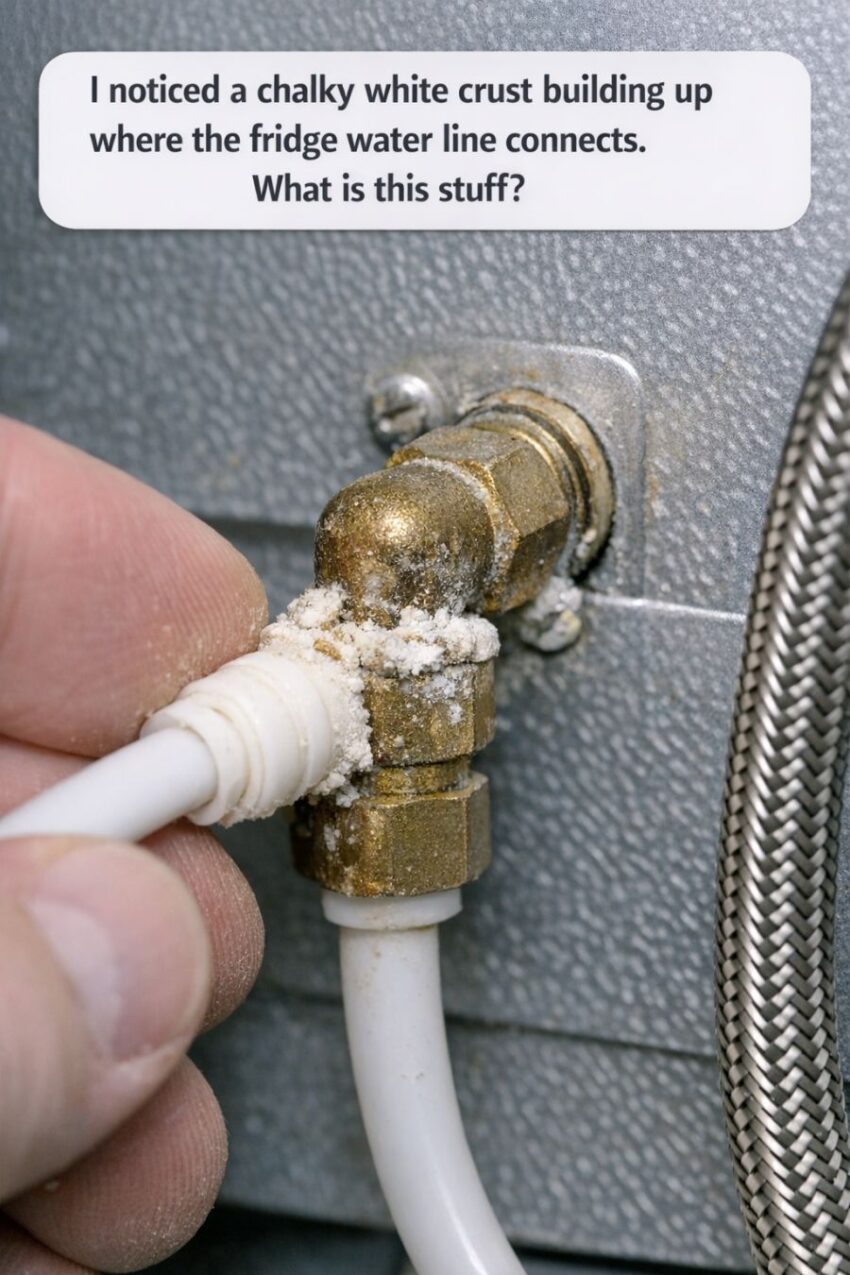
If you’ve ever noticed a chalky white crust building up where your fridge water line connects, you’re not alone. This is a common issue that many homeowners face, but it can be concerning if you’re unsure of what it is or whether it poses a risk to your water supply. The good news is that this buildup is often the result of mineral deposits from hard water and is generally a manageable issue.
Understanding what causes this chalky buildup and how to address it can help prevent further complications. In this article, we’ll explore the nature of these mineral deposits, why they occur, and what you can do to clean and prevent them effectively. We’ll also discuss when it’s time to call in a professional and how to ensure your water supply remains safe and uncontaminated.
1. What That Chalky White Crust Actually Is
The chalky white crust you see is most likely limescale, a type of hard, chalky deposit made primarily of calcium carbonate. This substance forms when hard water evaporates, leaving behind the minerals. Hard water is rich in minerals like calcium and magnesium, which are responsible for limescale.
Limescale is not harmful in small quantities, but it can become problematic if allowed to build up over time. It can restrict water flow, affect the efficiency of appliances, and even lead to mechanical failures if not addressed. Typically, limescale deposits can vary in size from a thin layer to a thick crust, depending on the hardness of your water and how long it has been left unchecked.
2. Why Fridge Water Lines Are Prone To Mineral Salt Buildup
Fridge water lines are particularly susceptible to mineral salt buildup because they are often made of materials that can accumulate these deposits over time. The small diameter and length of the lines increase the likelihood of scale formation, especially if the water is not flowing continuously.
Additionally, the temperature changes within the refrigerator can exacerbate the problem. As water cools, the minerals are more likely to precipitate out of the solution and adhere to surfaces. Over time, this can cause a noticeable buildup that needs to be addressed to maintain optimal water flow.
3. How To Tell If It’s Harmless Scale Or A Bigger Problem
To determine whether the buildup is simply harmless scale or indicative of a larger issue, you can start by examining the extent and location of the deposits. If the crust is localized to the connection point and is thin, it’s likely just limescale. However, if you notice water stains, leaks, or corrosion around the fittings, it may suggest a more serious problem.
Another way to assess the situation is by checking the water flow. If the flow is reduced or uneven, it could be due to a more significant blockage within the line. If you suspect a leak or a more severe blockage, it may be time to consult with a professional to avoid potential water damage or contamination.
4. Common Minerals In Tap Water That Leave White Deposits
The most common minerals in tap water that contribute to white deposits are calcium and magnesium. These minerals are naturally occurring in groundwater and are picked up as water passes through mineral-rich soil and rock layers.
In addition to calcium and magnesium, other minerals such as iron and manganese can also contribute to scale formation, although they tend to leave behind darker stains. Regions with particularly hard water will experience more significant limescale accumulation, as the water contains higher concentrations of these minerals.
5. Leaks, Drips, And Other Warning Signs To Look For
When inspecting for potential problems, look for signs of leaks or drips around the water line connections. Even a small, persistent drip can lead to significant mineral buildup over time. Water stains or discoloration around the fittings can also indicate a leak.
Other warning signs include unusual noises when dispensing water, reduced water flow, or the presence of mold or mildew around the connection points. These can signal that the issue is more severe than simple mineral deposits and may require immediate attention to prevent further damage.
6. Simple Ways To Safely Clean Off The Chalky Buildup
One of the simplest ways to clean off mineral deposits is to use a solution of equal parts water and white vinegar. Vinegar is acidic and can effectively dissolve the calcium carbonate deposits. Soak a cloth in the vinegar solution and wrap it around the affected area, allowing it to sit for 30 minutes to an hour before scrubbing gently with a brush.
For tougher buildup, you may need to repeat the process or use a commercial descaling product designed for use on kitchen appliances. Always ensure that any cleaning solution is thoroughly rinsed off to prevent any potential impact on the taste or safety of your water.
7. When You Need To Replace The Water Line Or Fittings
If the buildup persists despite regular cleaning, or if you notice persistent leaks or corrosion, it may be time to replace the water line or fittings. Over time, mineral deposits can weaken the integrity of the materials, leading to cracks or breaks.
Replacing these components can help prevent future leaks and ensure the efficient functioning of your fridge’s water system. If you’re unsure about how to replace these parts, it may be best to consult with a professional plumber to ensure the job is done correctly.
8. How Filters And Softeners Can Reduce Future Crust
Installing a water filter or softener can significantly reduce the amount of mineral buildup in your water lines. Water softeners work by exchanging calcium and magnesium ions in the water with sodium or potassium ions, effectively reducing hardness.
Filters can also help by trapping mineral particles before they enter the water line. Regularly replacing filters and maintaining softeners can help minimize future crust formation and prolong the life of your fridge’s water system.
9. DIY Fixes You Can Try Before Calling A Plumber
Before calling a plumber, there are several DIY fixes you can try. Regularly clean the area with vinegar to prevent buildup and check for leaks. Tighten any loose fittings with a wrench, being careful not to overtighten and damage the connections.
If you’re comfortable, you can also try replacing worn-out washers or O-rings within the fittings, as these can sometimes cause leaks. Always ensure the refrigerator is unplugged and the water supply is turned off before attempting any repairs.
10. When It’s Time To Worry About Mold, Corrosion, Or Contamination
If you discover mold or significant corrosion around your water line, it’s essential to address the issue promptly. Mold can pose health risks, and corrosion can lead to contamination of your water supply.
In such cases, it’s advisable to consult with a professional plumber to assess the extent of the damage and recommend appropriate repairs or replacements. Ensuring your water line is free from these issues will help maintain the safety and quality of your drinking water.