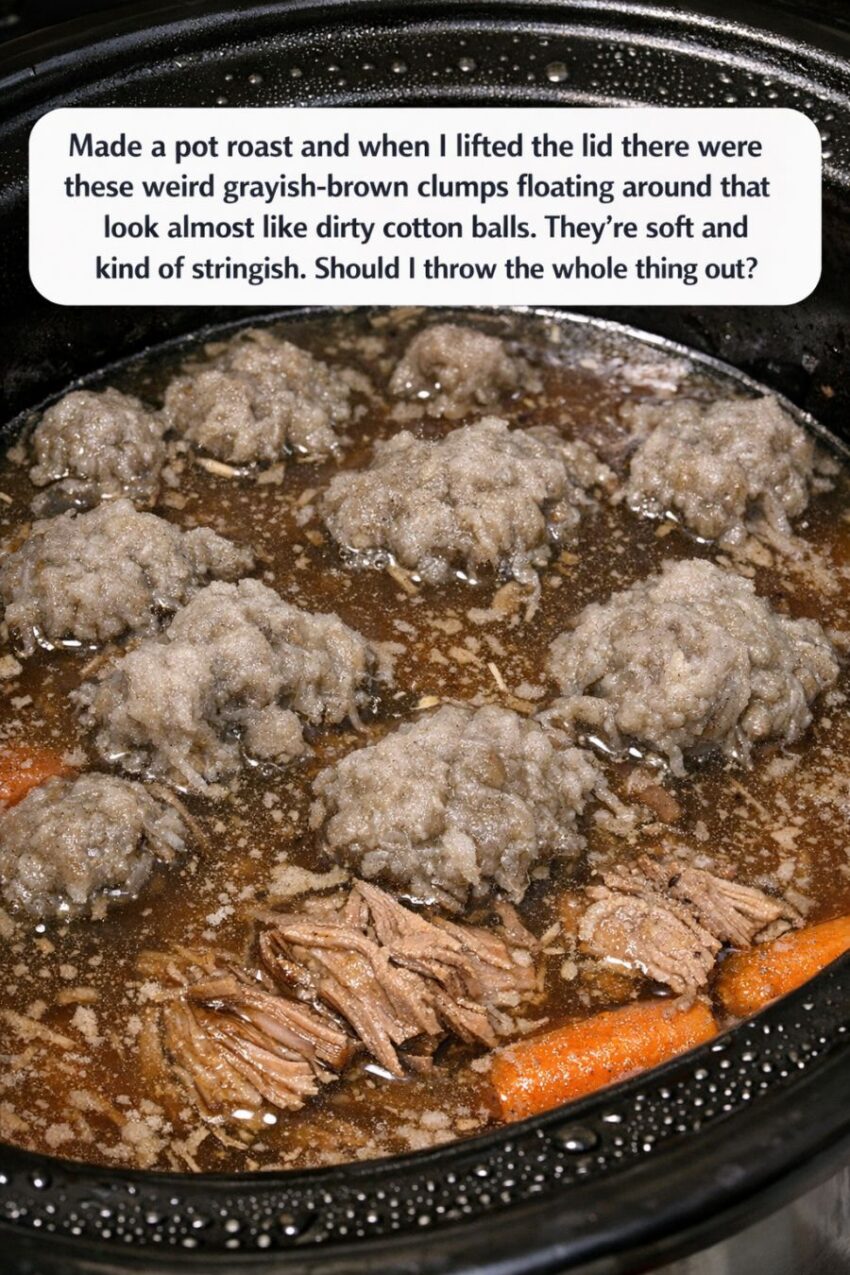
There’s nothing quite like the anticipation of lifting the lid on a slow-cooked pot roast. The aroma fills the kitchen, and your mouth waters at the thought of a perfectly tender meal. But what happens when you uncover something unexpected? Instead of a rich, bubbling broth, you find strange grayish-brown clumps floating on the surface, resembling dirty cotton balls. This sight might give you pause, leading to questions about the safety and quality of your dish.
Before you consider discarding your meal, it’s essential to understand what these clumps might be. In many cases, they are a natural result of the cooking process, particularly when dealing with cuts of meat rich in collagen and fat. Let’s explore the possible explanations for these unusual clumps, how to determine if your pot roast is still safe to eat, and what steps you can take to ensure an appetizing dish.
1. What Those Grayish-Brown “Cotton Balls” Most Likely Are
The grayish-brown clumps you see floating in your pot roast are most likely coagulated proteins, particularly collagen and fat, that have separated from the meat during the cooking process. As the pot roast cooks, the collagen in the meat breaks down, transforming into gelatin, which can sometimes form these clumps. These bits often appear when the broth cools down slightly, causing the gelatin to solidify.
Additionally, fat can congeal into floating clumps, especially if the roast wasn’t trimmed meticulously. These clumps are generally harmless, though they can be unsightly. The color results from the combination of meat juices and spices, creating a grayish-brown hue.
2. How Collagen and Fat Behave in a Slow-Cooked Pot Roast
Collagen is a structural protein found in connective tissues, which is abundant in tougher cuts of meat typically used for pot roast. When exposed to heat over a prolonged period, collagen breaks down into gelatin, contributing to the meat’s tenderness and the broth’s thickness. This is why slow-cooking methods are preferred for pot roasts.
Fat, on the other hand, renders slowly during cooking, adding flavor and richness. However, if there’s an excess of fat, or if the meat isn’t seared properly before slow cooking, it can congeal into clumps as the roast cools, particularly if the cooking temperature is too low or inconsistent.
3. The Science Behind Coagulated Collagen and Stringy Clumps
The transformation of collagen to gelatin is a key process in slow cooking. Collagen fibers unwind and dissolve into the liquid, creating a rich, velvety texture. However, if the cooking liquid is too acidic or if the roast isn’t cooked at a consistent temperature, gelatin can form clumps. This is especially true if the liquid isn’t stirred occasionally.
These stringy clumps are essentially strands of gelatin that have re-solidified. They can appear string-like due to the way collagen fibers unravel and intertwine during the cooking process. This is a normal reaction and doesn’t indicate spoilage.
4. When This Texture Change Is Completely Normal
In many cases, the appearance of these clumps is a normal part of the cooking process. They indicate that the collagen has successfully converted into gelatin, which is desirable for achieving that melt-in-your-mouth texture. If the taste and smell of your pot roast haven’t changed and are as expected, the clumps are likely harmless.
It’s important to note that different cuts of meat and cooking temperatures can influence the consistency and appearance of the broth. A slight variation in these factors can lead to more visible clumping without affecting the dish’s overall quality.
5. Visual And Smell Checks: Simple Tests Before You Panic
The first step in assessing whether your pot roast is safe to eat is a simple visual and smell check. Examine the color of the meat and broth; they should appear rich and appetizing, with no signs of mold or discoloration. The smell should be savory and pleasant. Any sour or off-putting odors could indicate spoilage.
If the appearance and smell are normal, taste a small portion to confirm. If everything checks out, the clumps are most likely a natural byproduct of cooking and can be addressed with simple culinary techniques.
6. Signs Your Pot Roast Actually Went Bad
There are clear indicators that your pot roast may have spoiled. These include an off-putting sour or ammonia-like smell, a slimy texture on the meat or surfaces, and any discoloration or mold growth. If you notice any of these signs, it’s best to err on the side of caution and discard the dish.
Another sign of spoilage could be an unusually fizzy broth, which might indicate fermentation caused by bacteria. If the broth seems effervescent, it’s safer not to consume it.
7. Safe-To-Eat But Unappetizing: What To Do With The Clumps
If the pot roast is safe to eat but the clumps are unappetizing, there are several ways to improve the dish’s appearance and texture. Start by skimming the surface with a spoon to remove any visible clumps. This can enhance the broth’s appearance and make the dish more visually appealing.
Alternatively, consider straining the broth through a fine-mesh sieve or cheesecloth to remove smaller particles. This method is effective for achieving a clearer broth without compromising flavor.
8. Easy Ways To Strain, Skim, Or Blend Them Back In
To address the clumps in your pot roast, you can use several kitchen techniques. Skimming involves using a spoon or ladle to remove clumps from the surface gently. For a more thorough solution, strain the broth through a fine sieve or cheesecloth to catch smaller particles.
If you prefer a creamier texture, consider blending the broth with an immersion blender. This will integrate the gelatin and fat into the liquid, resulting in a smooth, rich consistency that enhances the overall dish.
9. Cooking Techniques To Prevent Weird Floating Bits Next Time
To prevent clumping in future pot roasts, ensure you sear the meat well before slow cooking. This step helps render excess fat and lock in flavor. Trimming excess fat from the meat can also reduce clumping.
Maintaining a consistent cooking temperature and occasionally stirring the pot can help distribute heat evenly, preventing gelatin from clumping. Additionally, consider using a fat separator before serving to remove excess fat from the broth.
10. When You Really Should Throw The Whole Pot Roast Out
While the presence of clumps alone isn’t usually cause for alarm, there are situations when you should discard the pot roast. If the meat smells off, appears discolored, or has developed a slimy coating, it’s safer not to consume it. Mold growth or a fizzy broth are also indicators that the dish should be thrown out.
Trust your senses; if something doesn’t seem right, it’s better to avoid the risk of foodborne illness and dispose of the pot roast.
11. How To Turn This “Fail” Into A Better Pot Roast Recipe
Every cooking experience, even those with unexpected results, offers a learning opportunity. To improve your pot roast next time, focus on selecting high-quality cuts of meat that are well-marbled but not excessively fatty. Properly sear the meat to develop flavor and reduce clumping.
Experiment with different cooking times and temperatures to achieve the desired texture. Keeping notes on your process can help you identify what works best and refine your recipe. With practice, you’ll be able to create a pot roast that’s both visually appealing and delicious.